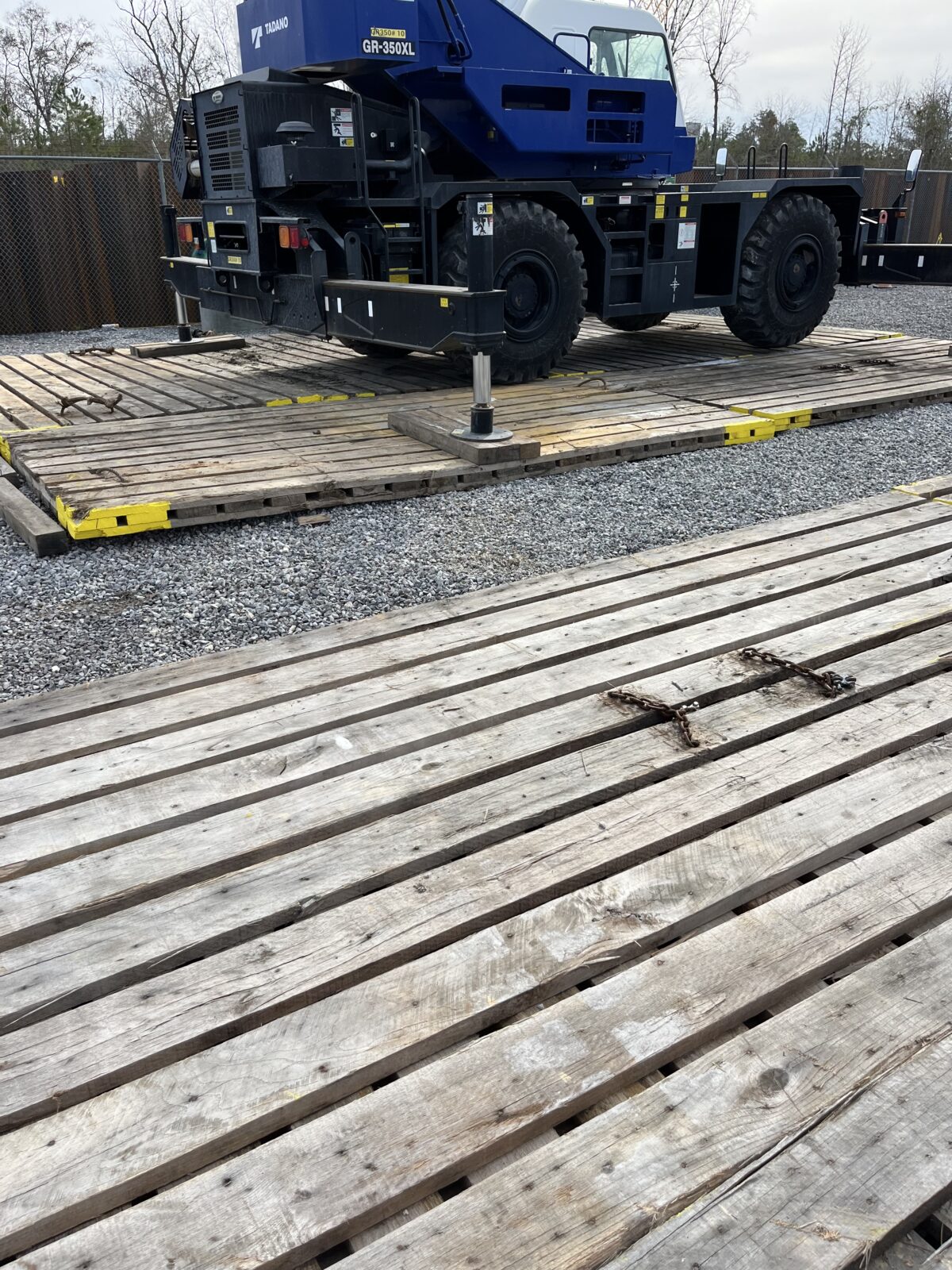
When heavy equipment arrives on a job site, most people focus on the machine itself. However, the ground beneath that equipment is just as important. If the surface cannot support the applied weight, equipment can sink, shift, become unstable, or even cause costly delays.
Determining the right amount of ground support is an important part of project planning. While engineers often perform detailed calculations for large-scale operations, understanding the factors that influence ground support can help contractors make smarter decisions and create safer work environments.
Start with Equipment Weight
The first step is understanding how much weight your equipment places on the ground. This includes not only the machine itself but also any loads it will lift, carry, or transport.
For example, a crane lifting a heavy load creates significantly more ground pressure than the crane’s base weight alone. Outriggers, tires, and tracks all distribute weight differently, so it is important to understand how the equipment interacts with the surface beneath it.
The heavier the equipment, the more support the ground will typically require.
Evaluate Ground Conditions
Not all job sites are created equal. A firm gravel surface can handle much more weight than soft soil, mud, sand, or recently disturbed ground.
Before equipment arrives, take time to evaluate site conditions. Consider factors such as:
- Soil type
- Moisture levels
- Recent weather conditions
- Slope or grade changes
- Existing pavement or gravel surfaces
Ground that appears stable on the surface may not provide adequate support below. This is especially common after heavy rain or during seasonal thaw periods.
Understand Ground Pressure Distribution
Ground support is not just about supporting weight. It is about spreading that weight over a larger area.
Crane mats, hardwood mats, and outrigger pads help distribute loads across more surface area, reducing the pressure placed on any single point. This helps prevent sinking, rutting, and instability.
Think of it this way: standing on soft ground in regular shoes creates more pressure than standing on the same ground wearing snowshoes. The larger surface area spreads the load more effectively.
The same principle applies to heavy equipment.
Plan for Safety Margins
Even if calculations show the ground can support a certain load, conditions can change throughout a project. Rain, traffic, and repeated equipment movement can weaken the surface over time.
Adding an extra margin of support helps account for unexpected changes and reduces risk. Using properly sized crane mats and ground protection systems provides additional stability and helps keep operations running safely.
Get Expert Guidance Before Equipment Arrives
Ground support calculations can become complex, especially for cranes and other heavy equipment operating on soft or uneven terrain. Taking the time to assess site conditions and plan proper support can help prevent costly damage, delays, and safety concerns.
At Ritter Forest Products, we help contractors and crane companies find the right ground support solutions for every project. We offer a large inventory of crane mats, laminated mats, hardwood mats, and outrigger pads designed to improve stability and protect job sites. Our team can help you choose the right products based on your equipment, site conditions, and project requirements. Explore our mat rentals online and request a quote for your next job.